Junteng Liu, Richard He Bai, Huangjie Zheng, Yizhe Zhang, Ruixiang Zhang, Code and benchmark release, 2026
[ code ] 
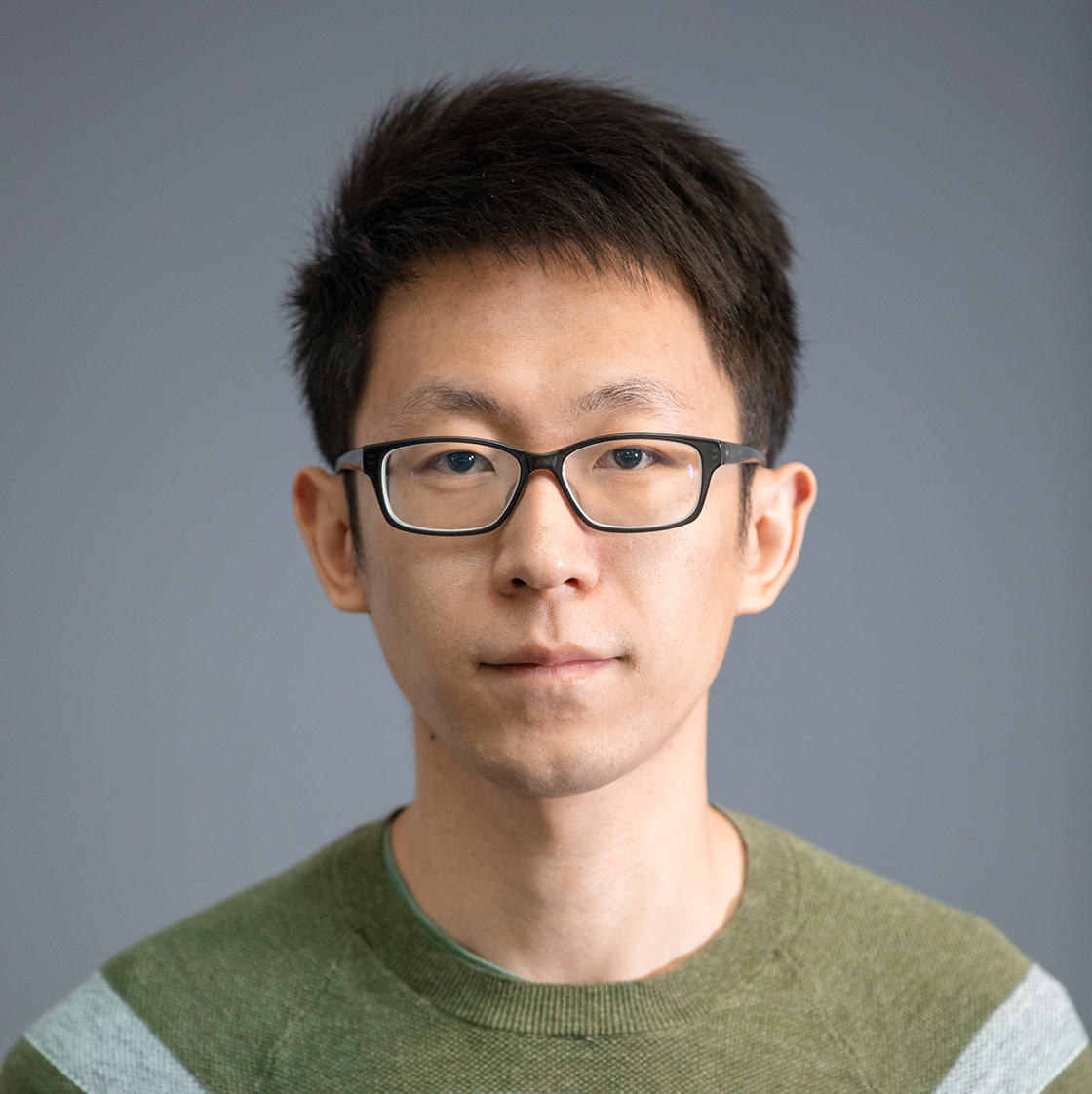
My research focuses on AutoResearch and AI scientist systems that plan, write and run code, and learn from feedback. I combine coding agents, evaluation environments and self-improvement with latent reasoning and inference optimization for efficient, reliable automation.
Junteng Liu, Richard He Bai, Huangjie Zheng, Yizhe Zhang, Ruixiang Zhang, Code and benchmark release, 2026 [ code ]
Yizhu Jiao, Ruixiang Zhang, Richard Bai, Jiawei Han, Ronan Collobert, Yizhe Zhang, NeurIPS, 2026 [ paper ]
Ying Shen, Tianrong Chen, Yuan Gao, Yizhe Zhang, Yuyang Wang, Miguel Ángel Bautista, Shuangfei Zhai, Joshua M. Susskind, Jiatao Gu, NeurIPS, 2026 [ paper ]
DACA-GRPO: Denoising-Aware Credit Assignment for Reinforcement Learning in Diffusion Language Models Amin Karimi Monsefi, Dominic Culver, Nikhil Bhendawade, Lokesh Boominathan, Manuel R. Ciosici, Yizhe Zhang, Irina Belousova, NeurIPS, 2026 [ paper ]
Amin Karimi Monsefi, Dominic Culver, Nikhil Bhendawade, Manuel R. Ciosici, Yizhe Zhang, Irina Belousova, NeurIPS, 2026 [ paper ]
Large Language Models (LLMs) excel at answering questions but often struggle with efficiently gathering relevant information when it is missing. We propose BED-LLM, a framework combining Bayesian Experimental Design with LLMs to enable intelligent, goal-directed information gathering. Our approach formulates the question-asking process as an adaptive experimental design problem, where the model learns to ask maximally informative questions. BED-LLM demonstrates significant improvements in information acquisition efficiency across diverse domains including medical diagnosis, troubleshooting, and general knowledge tasks. Deepro Choudhury, Sinead Williamson, Adam Golinski, Ning Miao, Freddie Bickford Smith, Michael Kirchhof, Yizhe Zhang, Tom Rainforth, ICLR 2026, 2026 [ paper ] Abstract
Chain-of-thought (CoT) reasoning has enabled significant improvements in language model capabilities but often leads to excessively long and inefficient outputs. We propose LASER (Length-Adaptive Shaping of Explicit Rewards), a reward shaping method that encourages models to generate concise yet accurate reasoning chains. Our approach dynamically adjusts the length penalty based on the reasoning complexity, enabling models to learn when detailed reasoning is necessary and when it can be abbreviated. Experiments show LASER achieves comparable or better accuracy while significantly reducing reasoning length across multiple benchmarks. Wei Liu, Ruochen Zhou, Yiyun Deng, Yuzhen Huang, Junteng Liu, Yuntian Deng, Yizhe Zhang, Junxian He, ICLR 2026, 2026 [ paper ] Abstract
Autoregressive language models (ARMs) deliver strong likelihoods, but are inherently serial: they generate one token per forward pass, which limits throughput and inflates latency for long sequences. We introduce FS-DFM (Few-Step Discrete Flow-Matching), a diffusion language model designed to accelerate text generation. The model maintains consistent quality across different sampling step budgets with a stable update rule using teacher guidance from long-run trajectories. It achieves perplexity parity with 1,024-step baselines using only 8 steps and delivers up to 128× faster sampling for 1,024-token generation. Shansan Gong, Zijing Ou, Yizhe Zhang, Navdeep Jaitly, Mukai Li, ICLR 2026, 2026 [ paper ] Abstract
Standard discrete diffusion models treat all unobserved states identically by mapping them to an absorbing [MASK] token, creating an information void where semantic information that could be inferred from unmasked tokens is lost between denoising steps. We present CADD, which augments discrete state spaces with paired continuous latent space diffusion. This approach represents masked tokens as noisy yet informative vectors rather than collapsed states. At sampling time, the continuous latent can guide discrete denoising while enabling trade-offs between diverse outputs and contextually precise generation, demonstrating improvements over mask-based diffusion across text, image synthesis, and code modeling tasks. Ruixiang Zhang, Shuangfei Zhai, Linh Tran, Yizhe Zhang, Tao Wang, Navdeep Jaitly, Joshua Susskind, ICLR 2026, 2026 [ paper ] Abstract
Retrieval-augmented generation (RAG) enhances large language models (LLMs) with external knowledge but still suffers from long contexts and disjoint retrieval-generation optimization. We propose CLaRa, a framework performing embedding-based compression and joint optimization in a shared continuous space. It introduces SCP, a data synthesis framework, and trains components end-to-end via language modeling loss with a differentiable top-k estimator, achieving state-of-the-art compression and reranking performance on QA benchmarks. Jie He, Richard He Bai, Sinead Williamson, Jeff Z. Pan, Navdeep Jaitly, Yizhe Zhang, CoLM, 2026 Abstract
Large Language Models (LLMs) demonstrate reasoning through chain-of-thought (CoT) generation. However, LLM's autoregressive decoding may limit the ability to revisit and refine earlier tokens holistically, leading to inefficient exploration for diverse solutions. We propose LaDiR, combining a Variational Autoencoder and latent diffusion model to create iterative refinement capabilities for reasoning. It encodes reasoning steps into thought tokens and uses blockwise bidirectional attention for parallel generation of diverse reasoning trajectories, showing improvements in accuracy, diversity, and interpretability across mathematical reasoning and planning benchmarks. Haoqiang Kang, Yizhe Zhang, Nikki Lijing Kuang, Nicklas Majamaki, Navdeep Jaitly, Yi-An Ma, Lianhui Qin, ICLR 2026, 2026 [ paper ] Abstract
Diffusion large language models (dLLMs) are compelling alternatives to autoregressive (AR) models because their denoising models operate over the entire sequence. We trained a 7B model on 130B code tokens and proposed coupled-GRPO, a novel reinforcement learning sampling scheme. Our work achieved +4.4% on EvalPlus and demonstrated how diffusion models can reduce dependence on autoregressive bias during code generation. Shansan Gong, Ruixiang Zhang, Huangjie Zheng, Jiatao Gu, Navdeep Jaitly, Lingpeng Kong, Yizhe Zhang, ICLR 2026, 2026 Abstract
Haoqiang Kang, Yizhe Zhang, Nikki Lijing Kuang, Jiatao Gu, Yian Ma, Lianhui Qin, arXiv, 2026 [ paper ]
Jiarui Lu, Yuyang Wang, Yizhe Zhang, Jiatao Gu, Navdeep Jaitly, Joshua M. Susskind, Miguel Ángel Bautista, arXiv, 2026 [ paper ]
Guancheng Tu, Xiangjun Fu, Suhao Yu, Yao Tang, Haoqiang Kang, Lianhui Qin, Yizhe Zhang, Jiatao Gu, arXiv, 2026 [ paper ]
Chunyuan Deng, Yizhe Zhang, Rui-Jie Zhu, Yuanyuan Xu, Jiarui Liu, T. S. Eugene Ng, Hanjie Chen, arXiv, 2026 [ paper ]
Mohammadreza Armandpour, Fatih Ilhan, David Harrison, Ajay Jaiswal, Duc N. M. Hoang, Fartash Faghri, Yizhe Zhang, Minsik Cho, Mehrdad Farajtabar, arXiv, 2026 [ paper ]
We demonstrate that language models can enhance code generation performance by sampling their own outputs and fine-tuning on them—without external verifiers or teachers. Our approach, simple self-distillation (SSD), improved Qwen3-30B-Instruct performance from 42.4% to 55.3% pass@1 on LiveCodeBench v6. The method works by suppressing distractor tails where precision matters while preserving useful diversity where exploration matters, and shows consistent gains across multiple model sizes and variants. Ruixiang Zhang, Richard He Bai, Huangjie Zheng, Navdeep Jaitly, Ronan Collobert, Yizhe Zhang, arXiv, 2026 Abstract
We present ASTRA-bench, a benchmark designed to evaluate AI agents on complex, real-world scenarios. The framework incorporates time-evolving personal context with an interactive toolbox and complex user intents, generating 2,413 test scenarios across four characters. Advanced models like Claude-4.5-Opus and DeepSeek-V3.2 reveal significant performance degradation under high-complexity conditions, with argument generation emerging as the primary bottleneck. Zidi Xiu, David Q. Sun, Kevin Cheng, Maitrik Patel, Josh Date, Yizhe Zhang, Jiarui Lu, Omar Attia, Raviteja Vemulapalli, Oncel Tuzel, Meng Cao, Samy Bengio, arXiv, 2026 [ paper ] Abstract
We present LaDi-RL, combining latent diffusion models with reinforcement learning for test-time scaling in reasoning tasks. Our approach achieves state-of-the-art results on mathematical reasoning benchmarks: 20.5 on AIME25 and 52.7 on LCB v6 using only an 8B parameter model, with 2x faster inference compared to autoregressive approaches. Surprisingly, we find that RL training for latent reasoning does not suffer from the entropy collapse and diversity reduction commonly observed in autoregressive models, maintaining solution diversity while improving accuracy. Haoqiang Kang, Yizhe Zhang, Nikki Lijing Kuang, Yi-An Ma, Lianhui Qin, arXiv, 2026 [ paper ] Abstract


